Having a passion for trees and shrubs means that whilst these have been the backbone of the garden over the years, herbaceous, annuals and bulbs have, and do, continue to feature.
Over recent years we have also introduced a number of herb planters and have expended this recently with a number of pot grown specimens such as launder, rosemary and thyme.


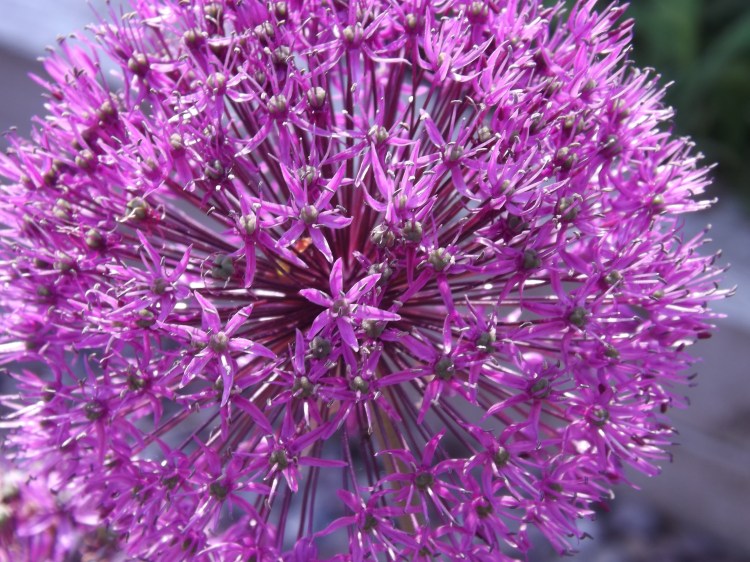


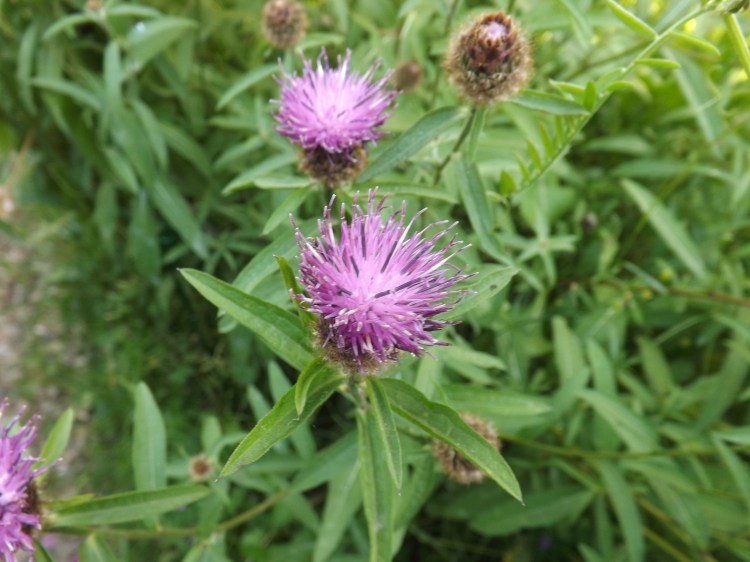
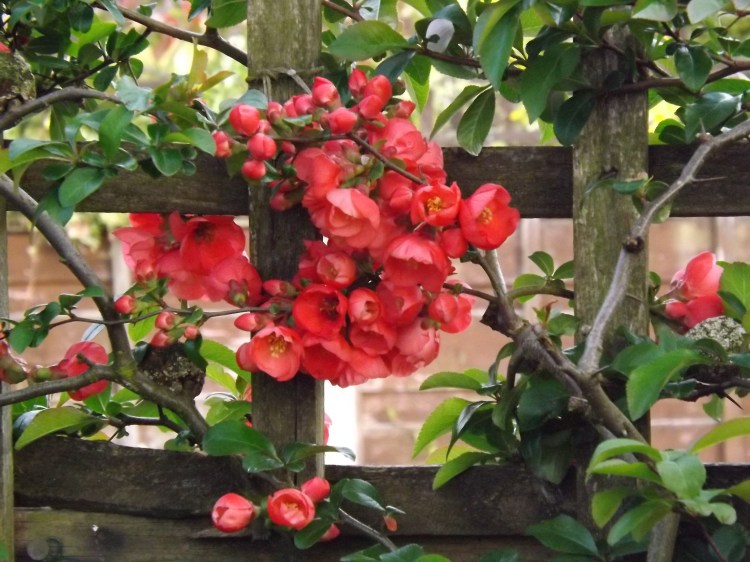
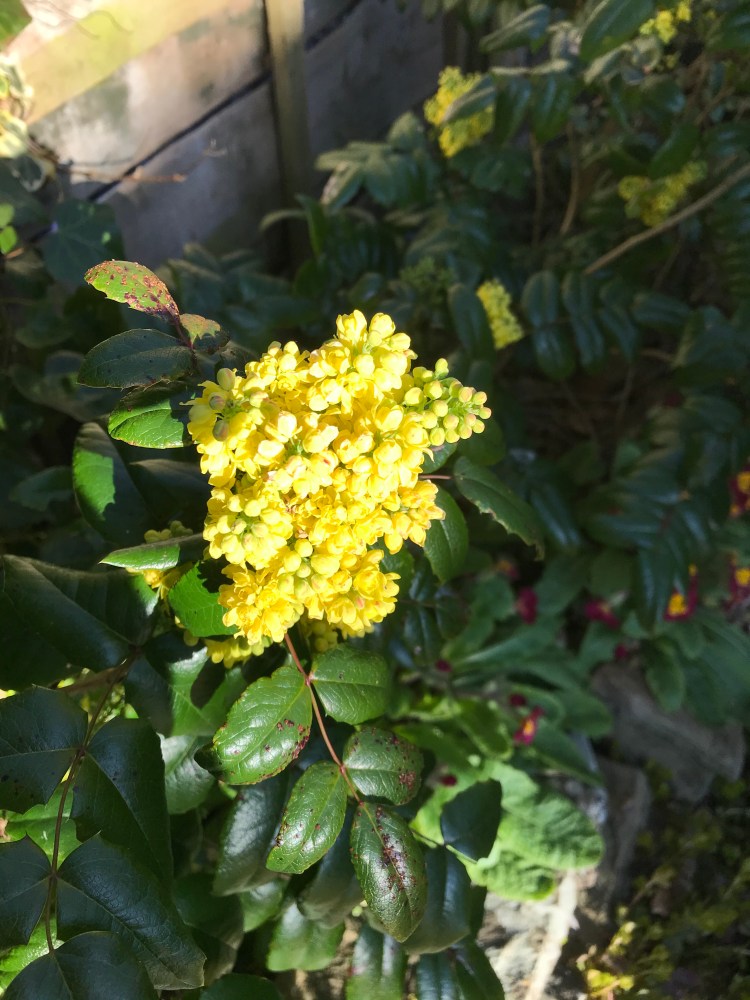

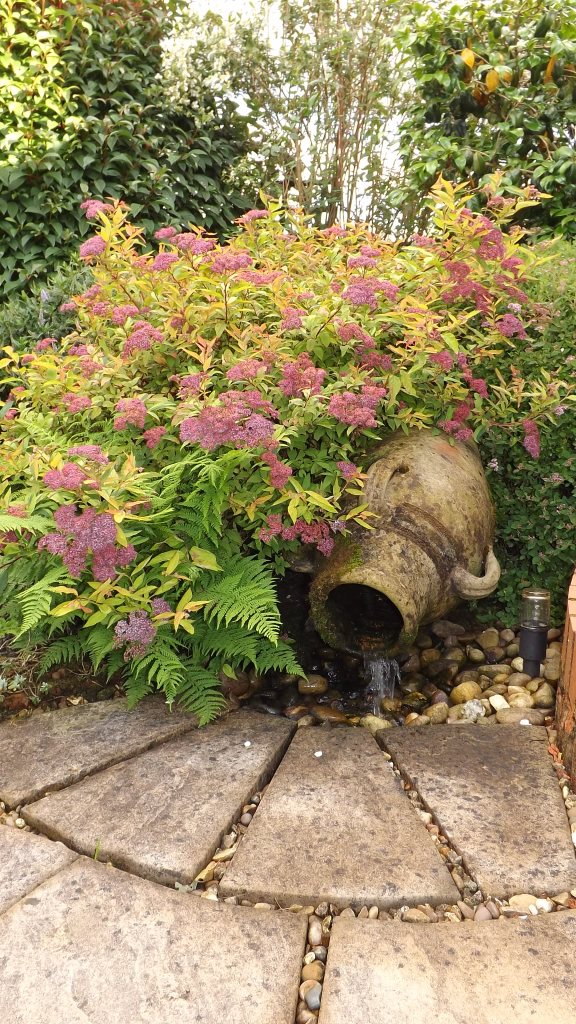
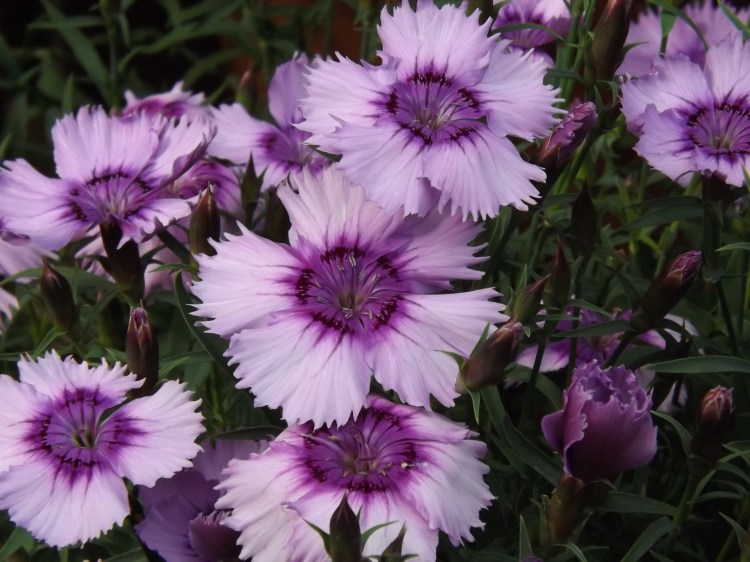
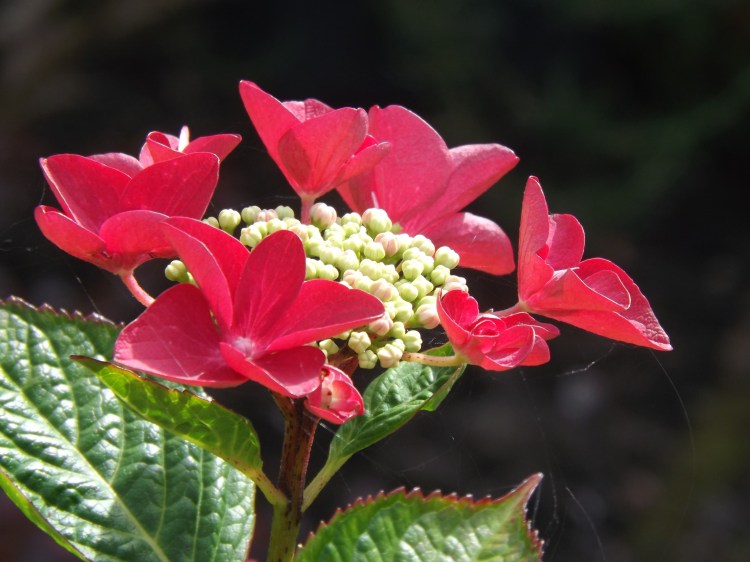
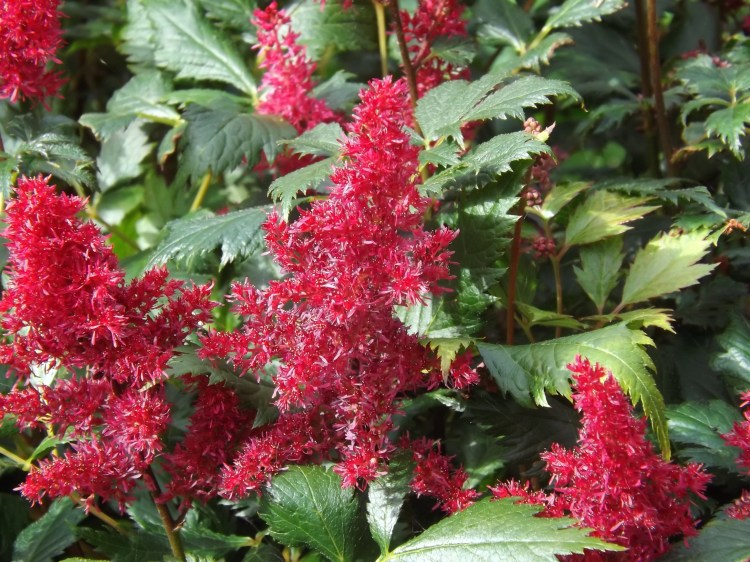

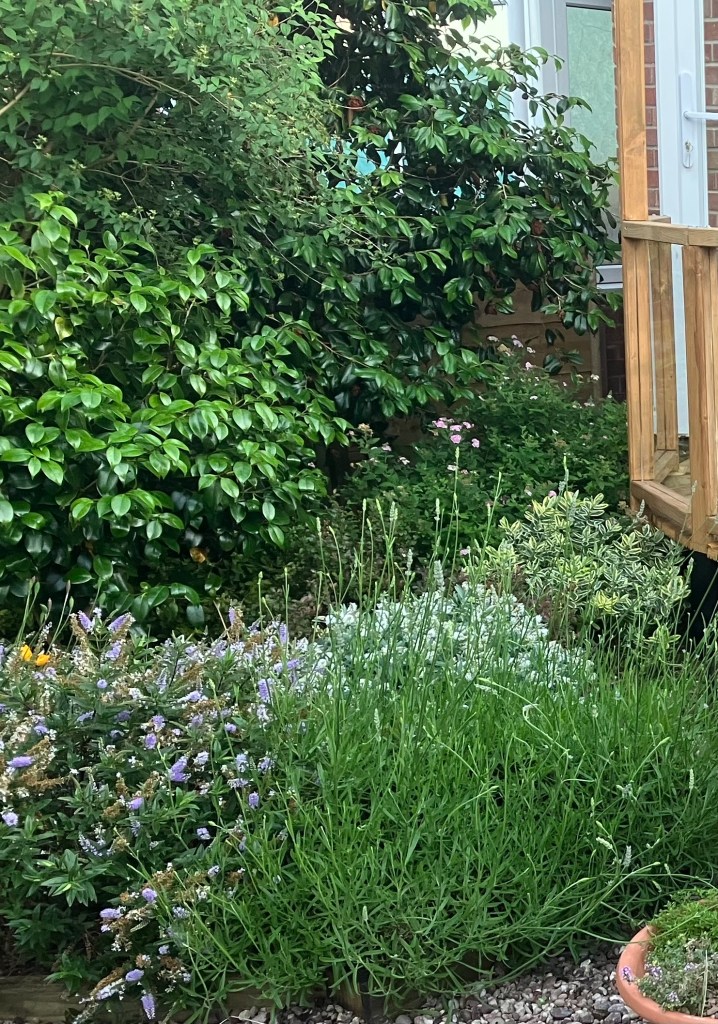
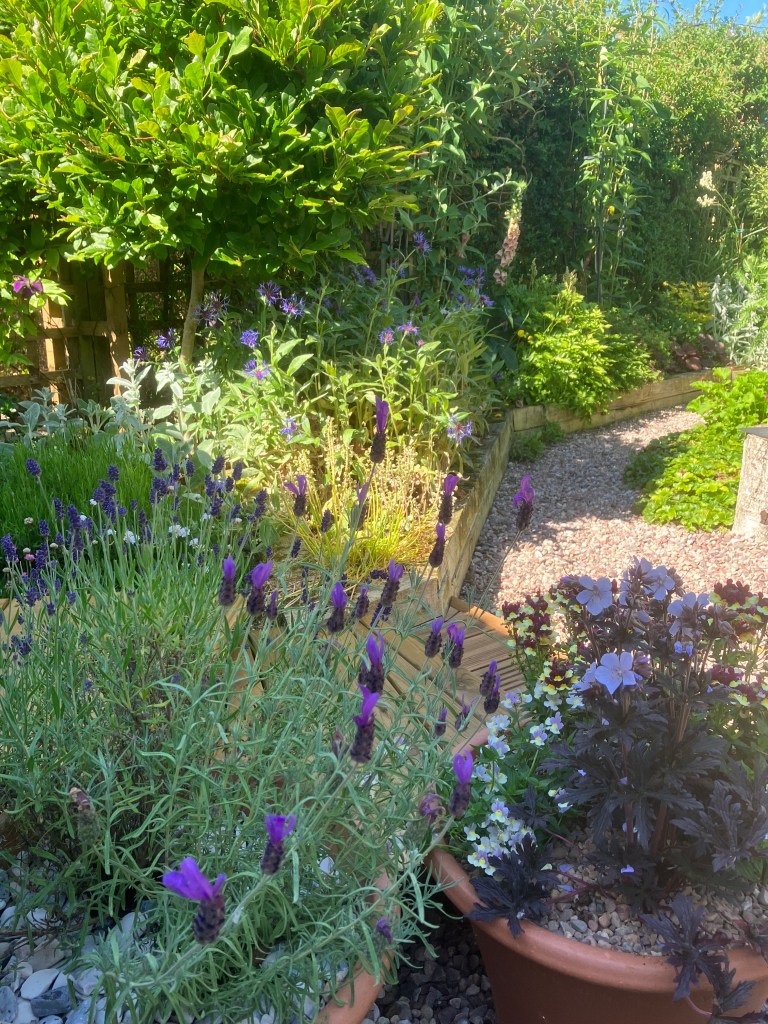
Despite our soil type Azaleas perform well planted under the cherry tree in a semi-woodland type environment. Other good performers are Buddleia, Choisya, Cotinus coggygria ‘Royal Purple’, Escallonia, Euonymus and Pieris ‘Forest Flame’. We also find that Camellias perform well, although a couple of them appear to flower spasmodically.
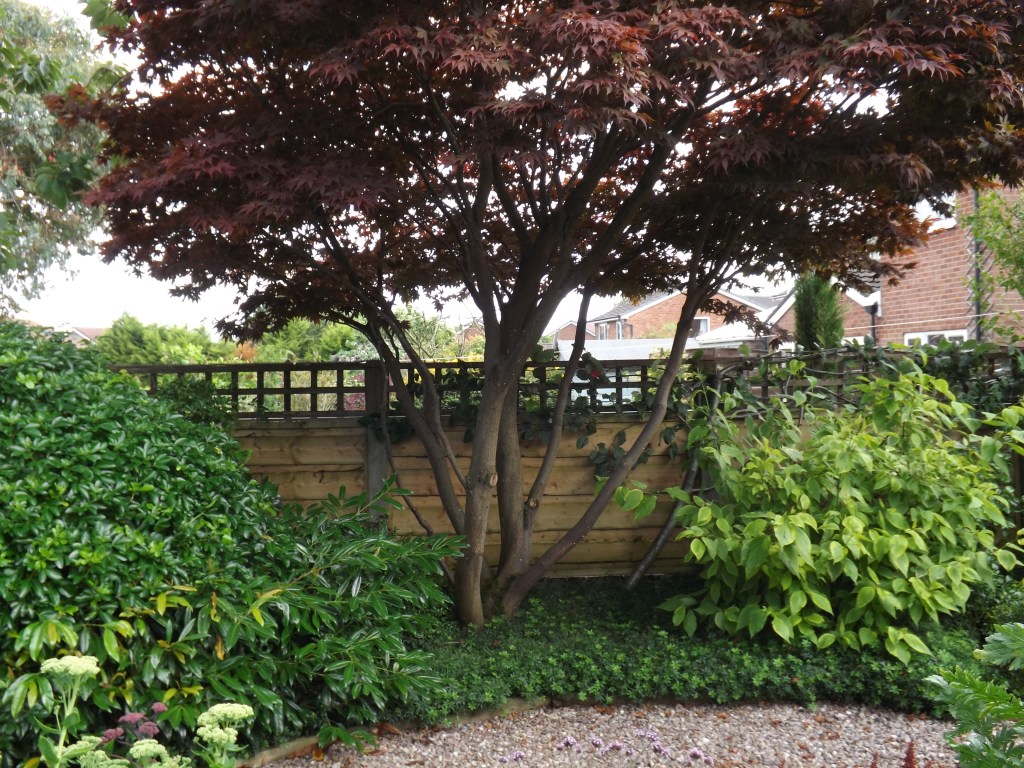
The Japanese Maple, Acer palmatum ‘Atropurpureum’, was a reject from a nursery I managed nearly 50 years ago. Despite not making the grade then, this has now become a key feature plant in the garden having developed into a superb multi-stemmed tree.
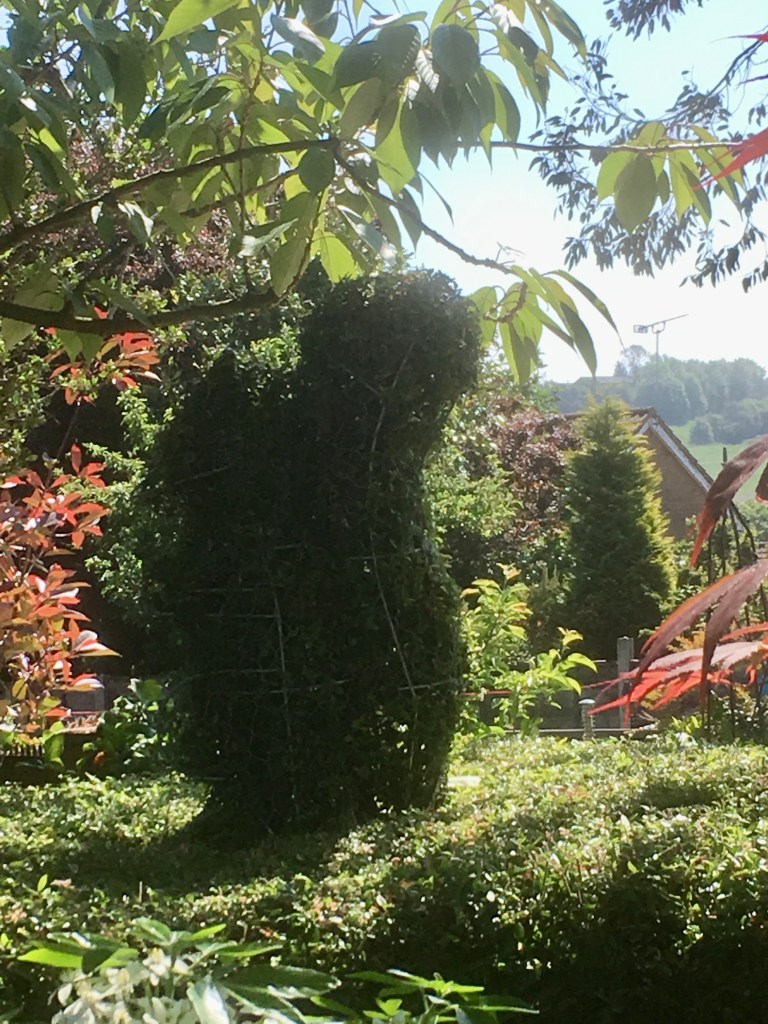
Other shrubs that have done well for us include Cornus alba ‘Elegantissima’ for both summer and winter colour, Mahonia aquilfolium and Sarcococca (Sweet Box) for mid-winter scent and Chaenomeles speciosa for spring colour. We have a number of plants of Lonicera pileata as filler plants with one of them being trained into our own “fun” topiary of a ‘Green Squirrel”.
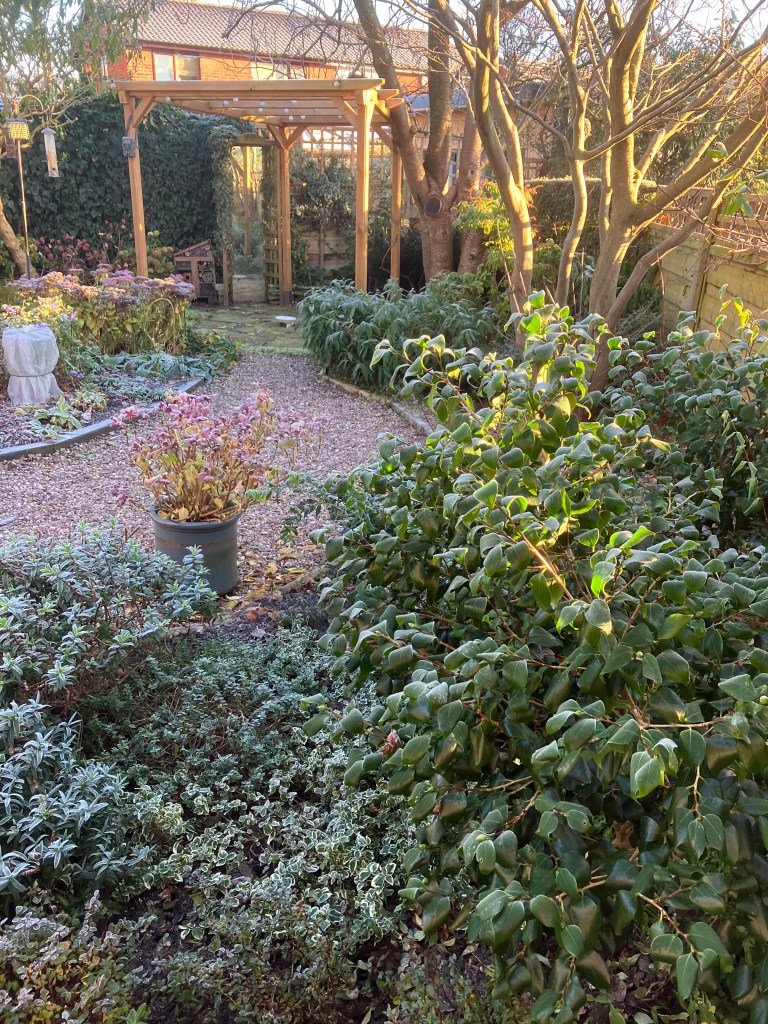
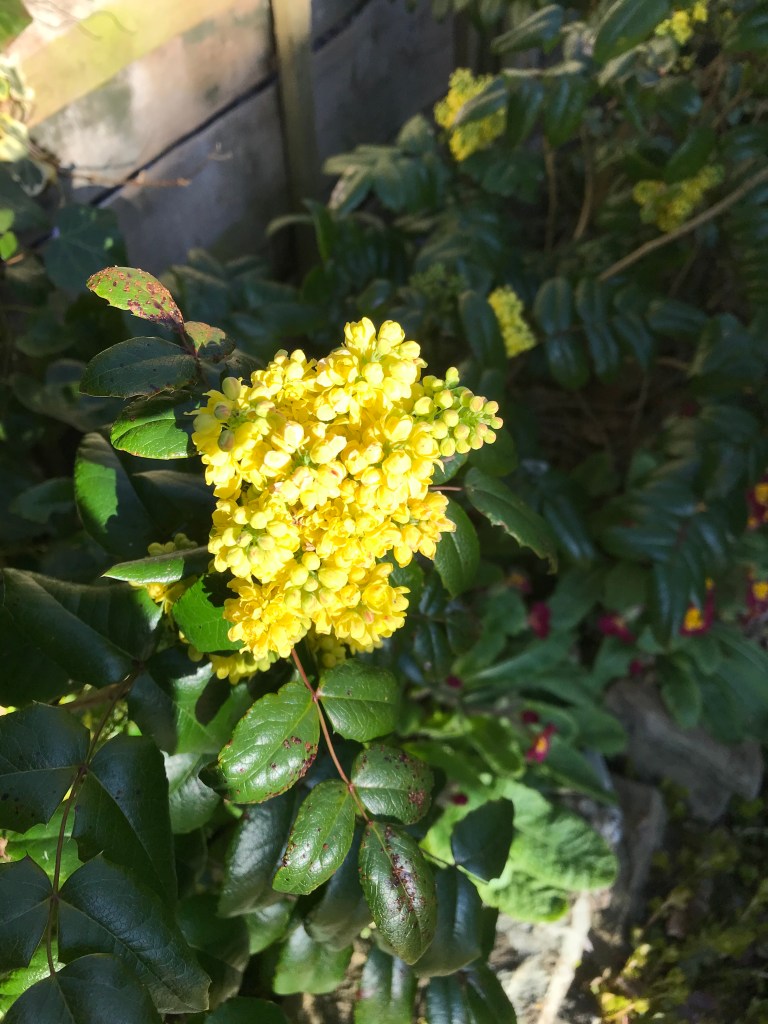
Experimenting with Plants
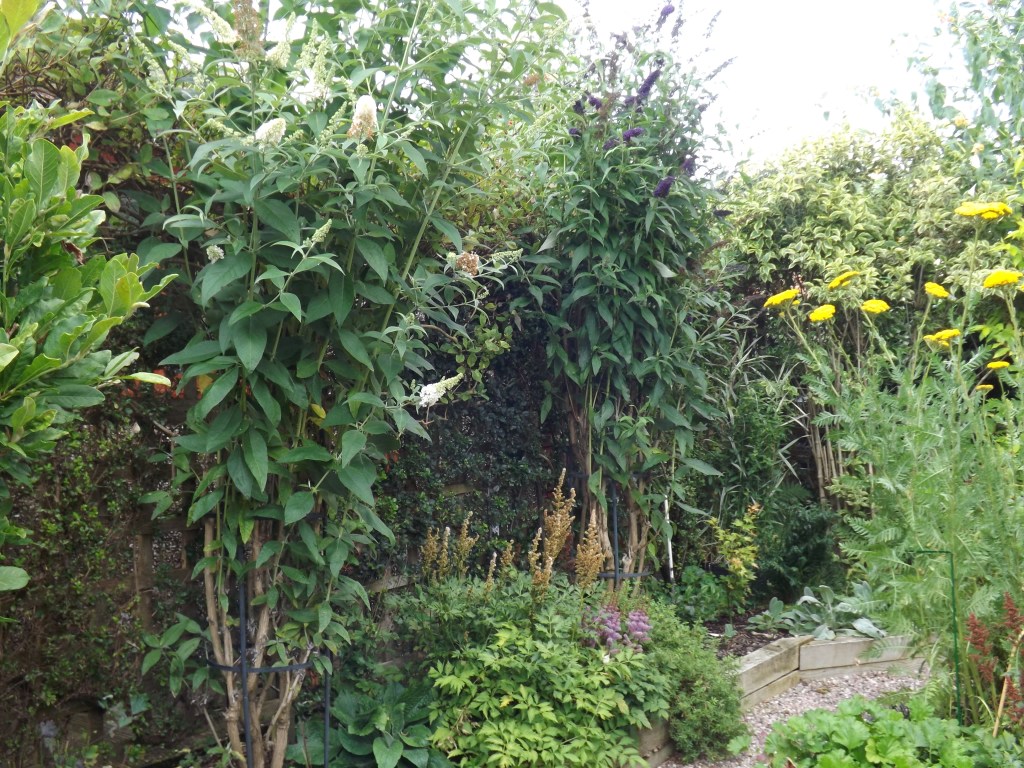
Buddlejas perform well in the garden but can easily block out the light from adjacent plants. To stop them becoming too wide and creating too much shade we grow ours in obelisks – and tie in any branches that develop outside of the frame. We have Buddleja ‘Black Knight’ and ‘Buzz Ivory’
The raised bed with the Buddlejas is a mixture of herbaceous and evergreen and deciduous shrubs and is a bed that has changed and evolved over time and will, no doubt continue to do so. Planting includes a Viburnum ‘Tinus’, Acer palmated ‘Orange Dream’, Euonymus fortunei ‘Silver Carpet’, a small selection of Astilbes, a number of Heuchera and a patch of Centurea montana.
To keep the stems of Acer palmatum ‘Atropurpureum’ clear we make sure that any signs of growth, even just a small leaf or two are removed. Over the years the tree has been crown lifted to gradually reveal more of the stems with their attractive markings – along with the added bonus of some interesting patches of moss developing at the base of the tree.
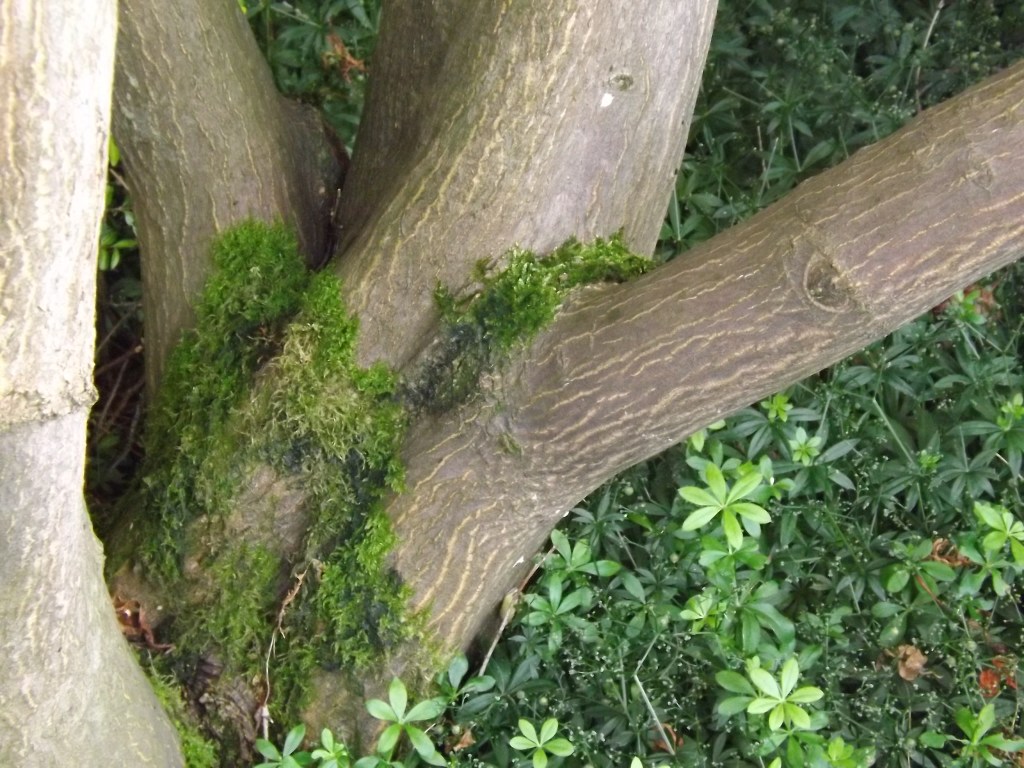
With a relatively small garden there is a limit to the number of fully grown trees that can be accommodated – so why not use some of the techniques used for growing fruit for other trees. Along the fence under the Acer there is a another tree, Sorbus aria or Whitebeam. This must be at least 15 years old and does require quite a lot of care and attention to keep it confined to the space available, but it still flowers and produced a good crop of berries each year.
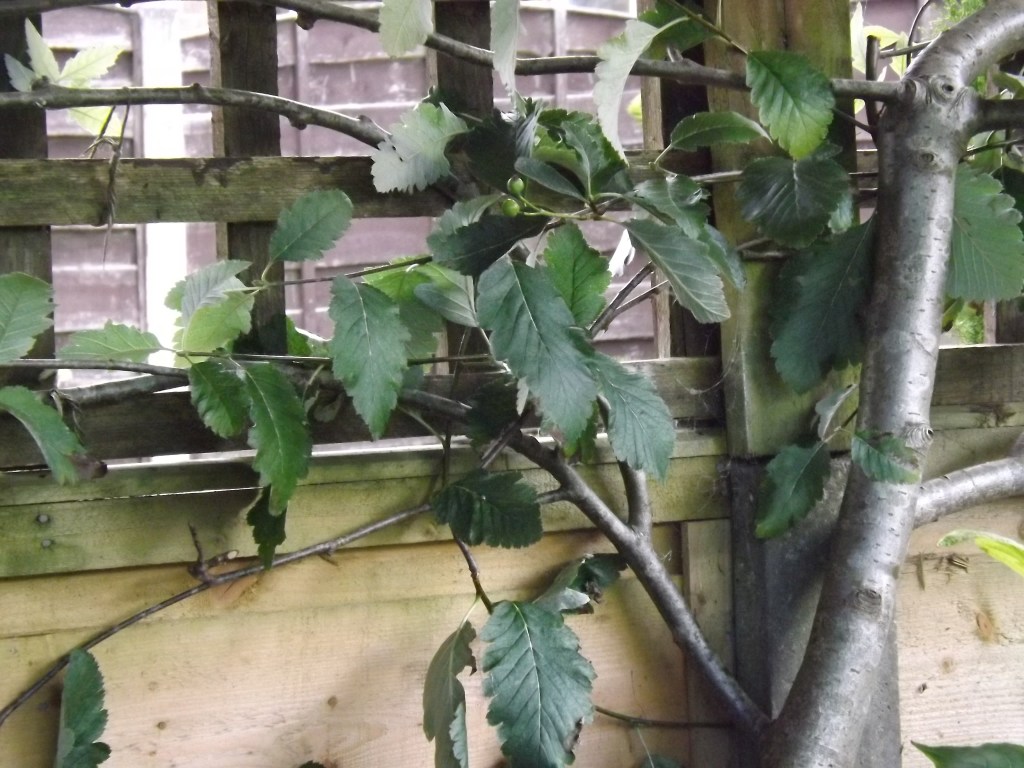
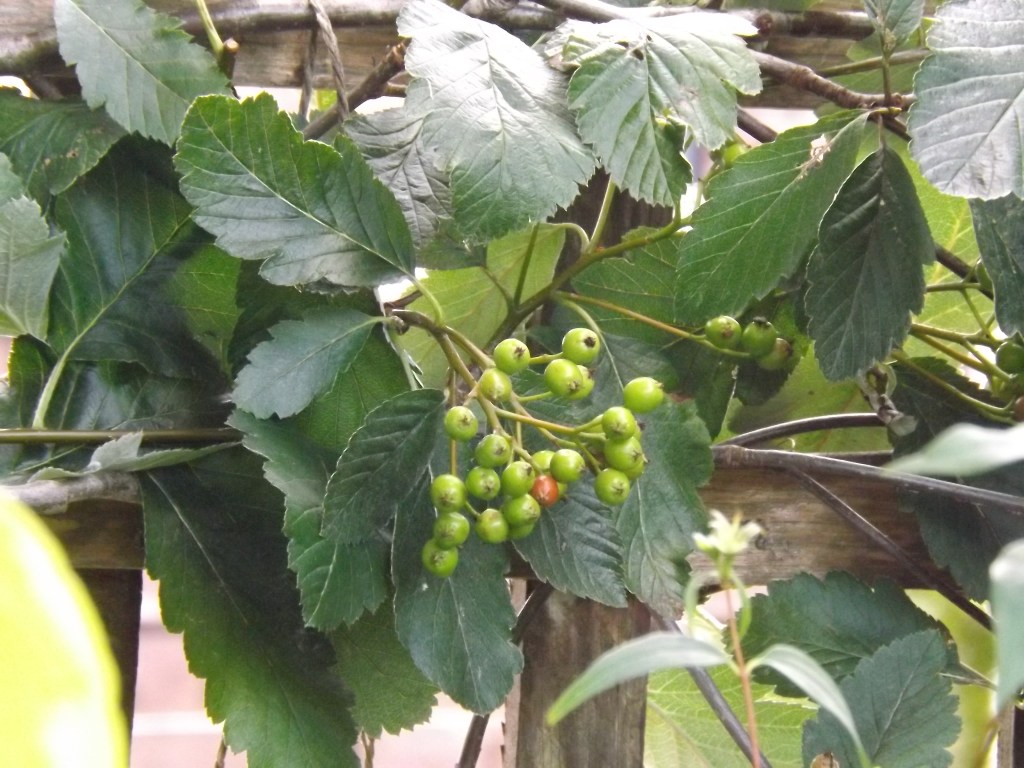
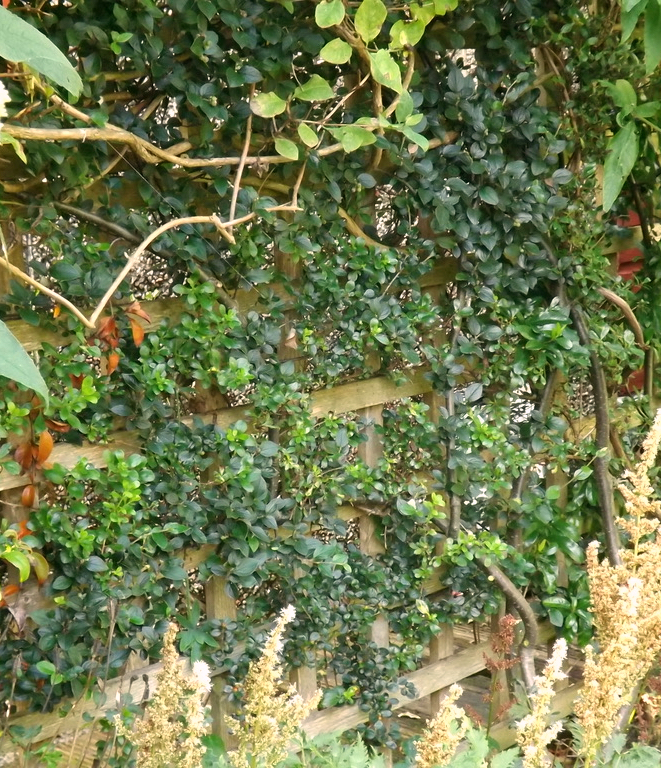
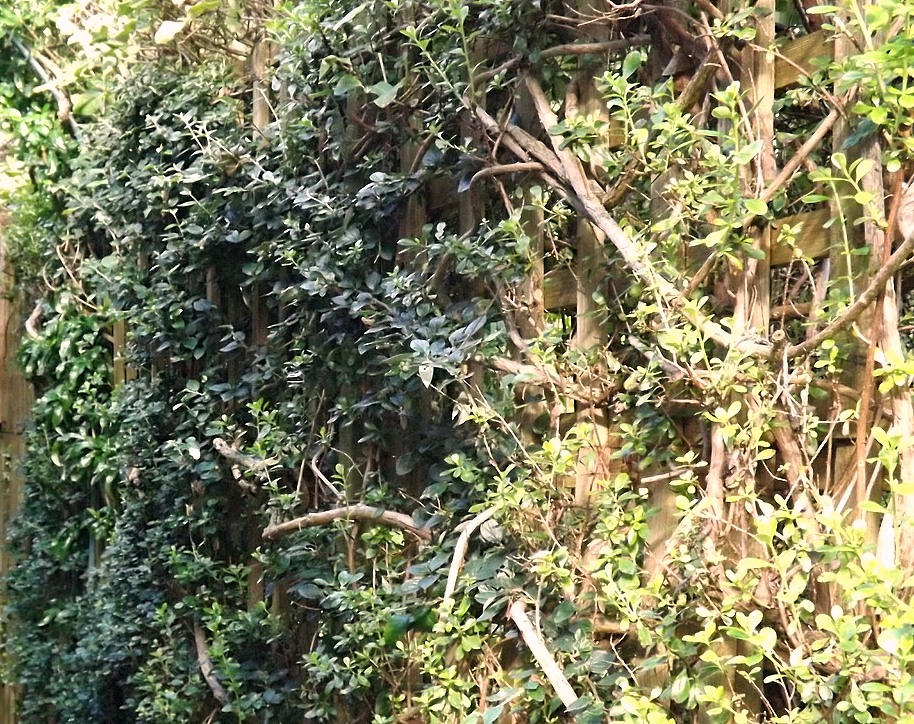
Where ground space is limited, it is always possible to “go vertical”. We have looked at the green wall options but at the moment the cost for covering even a relatively small area appears quite high. However, trellis isn’t just for climbers, and with a little thought and effort a number of plants can be “trained” to grow up! On an 8m run of 1.8m trellis we are growing 10 different plants – a mix of traditional climbers such as Lonicera perclymenum, Clematis and Ivy plus others normally grown in shrub form – Escallonia ‘Donard Seedling’,Lonicera pileata, Cotoneaster horizontals, Cotoneaster sternianus and Pyracantha Saphyr Rouge.
Herbaceous Perennials
In recent years the range of Herbaceous Perennials and grasses we are growing has increased adding an additional dimension to the garden with both flower and leaf shape and texture. As with all plants there is a degree of experimenting to see what will survive and flourish in our, sometimes heavy and wet soil and what locations in the garden suite which plants.


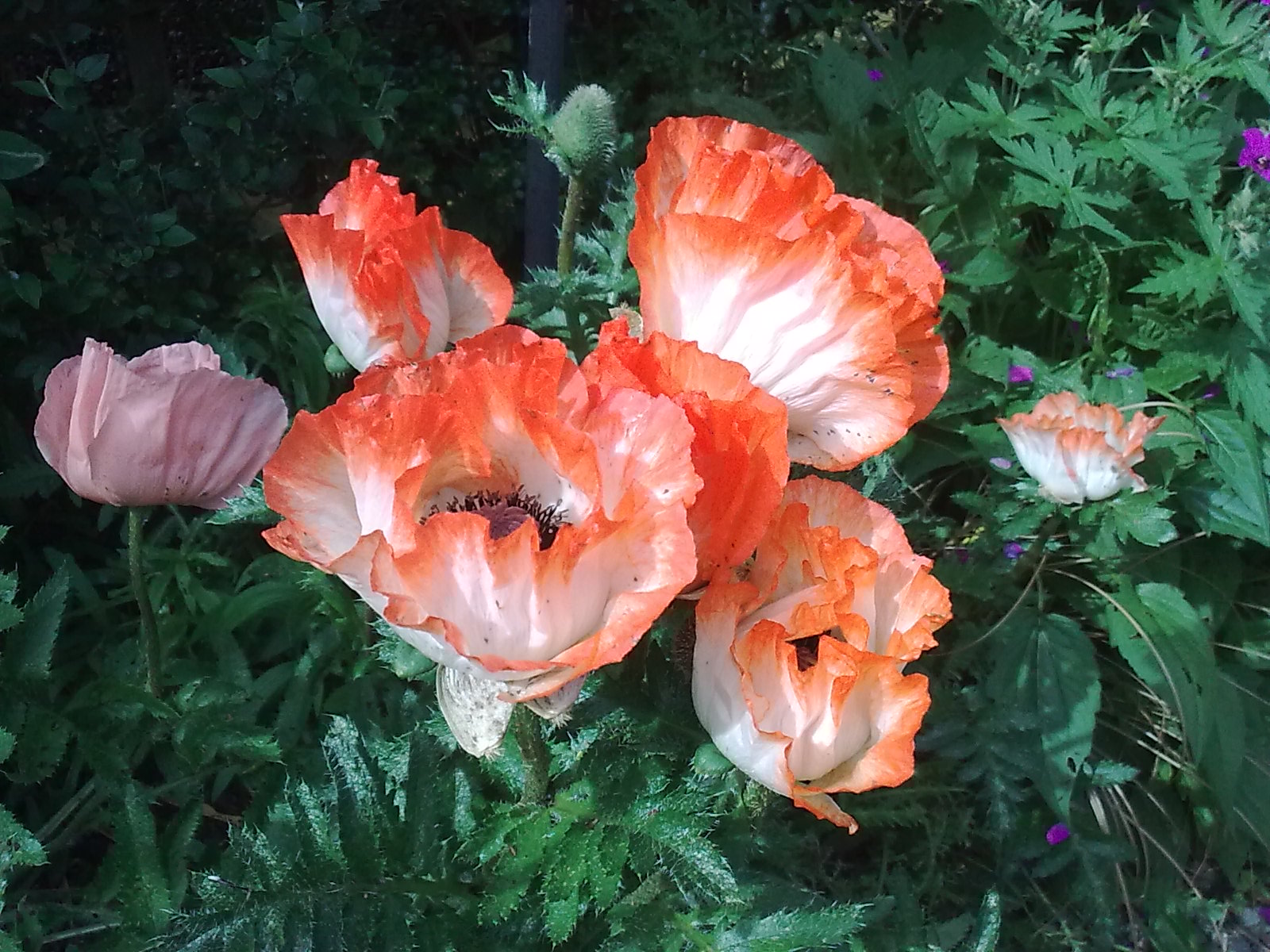
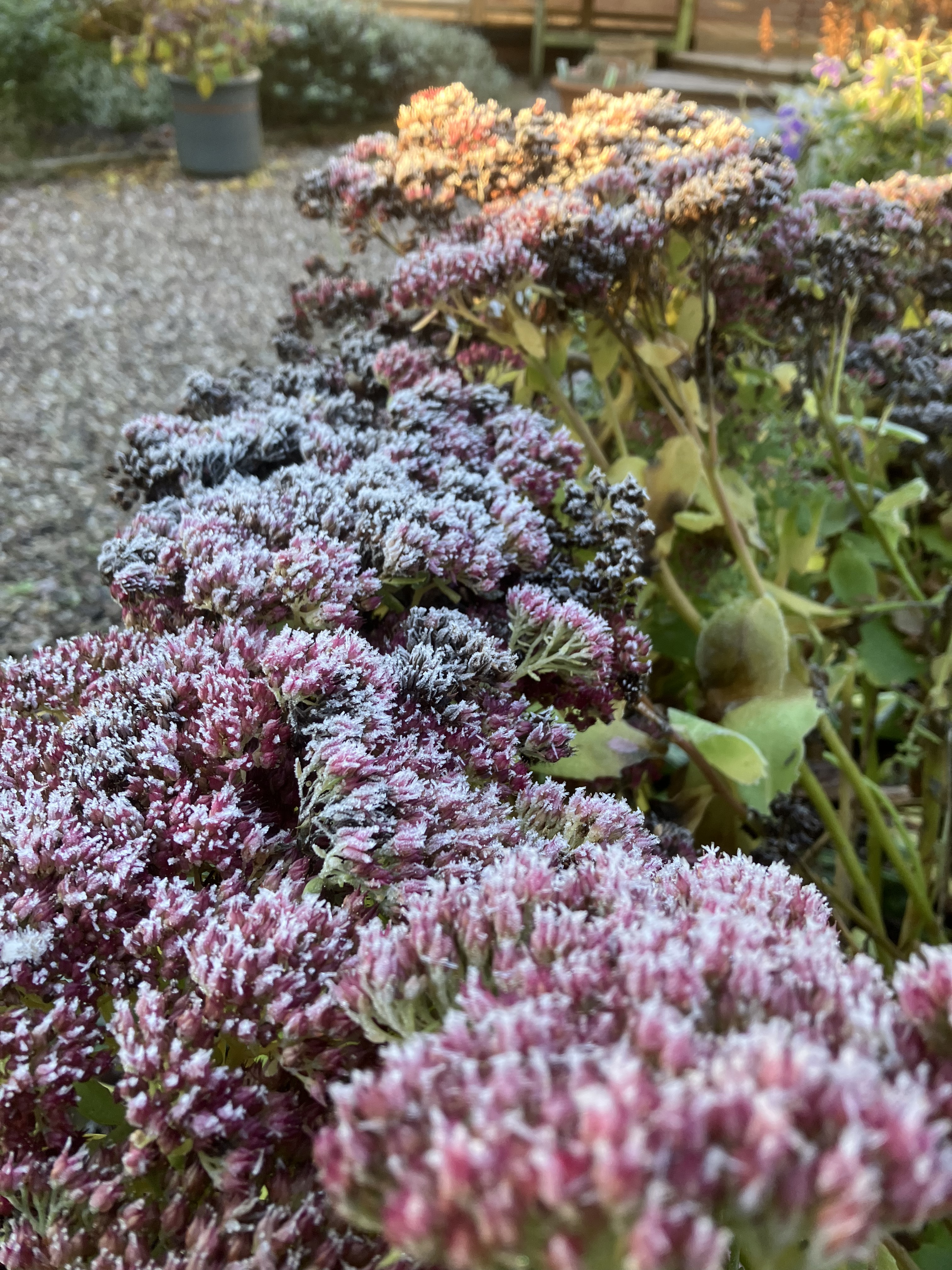
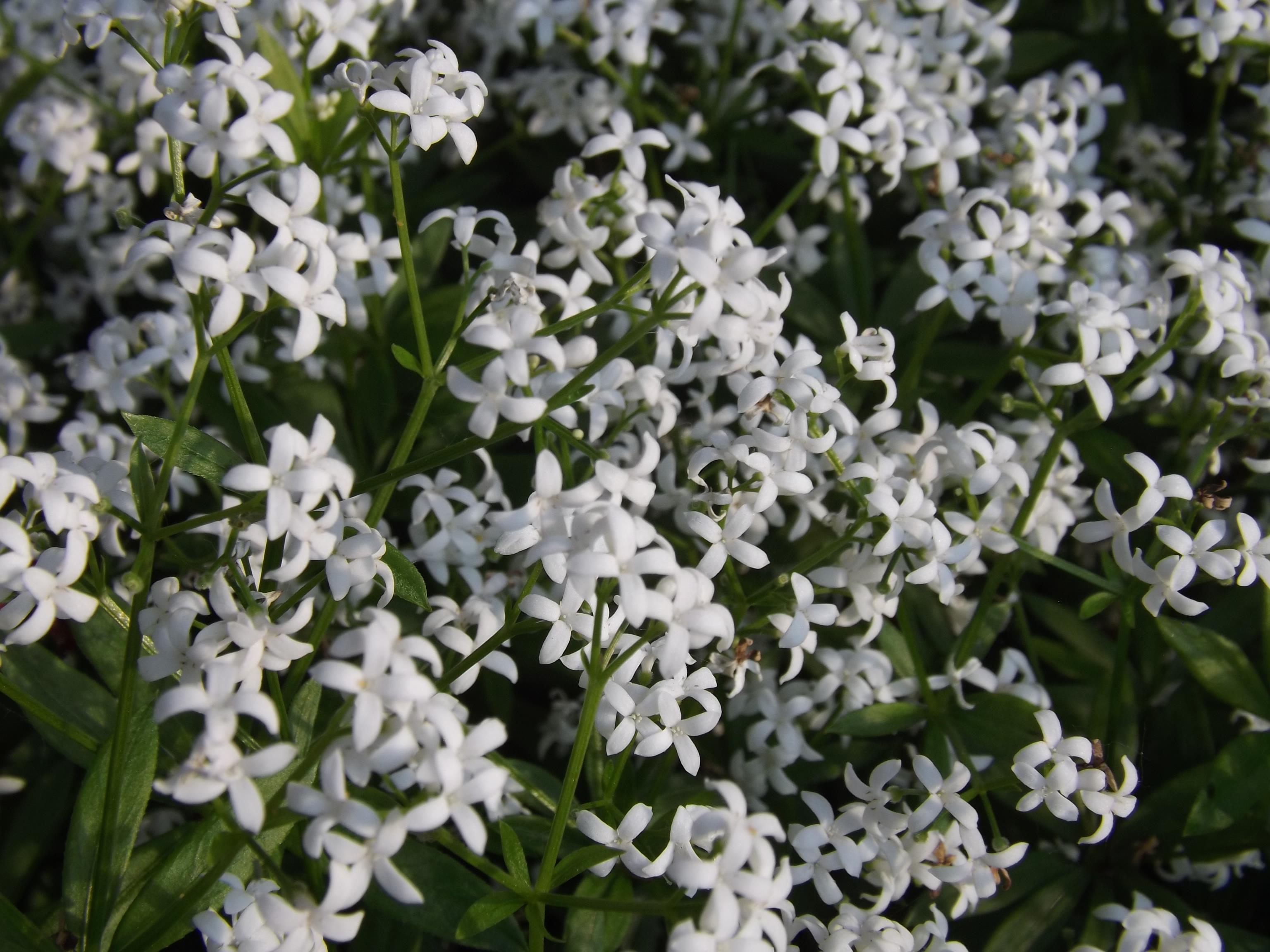
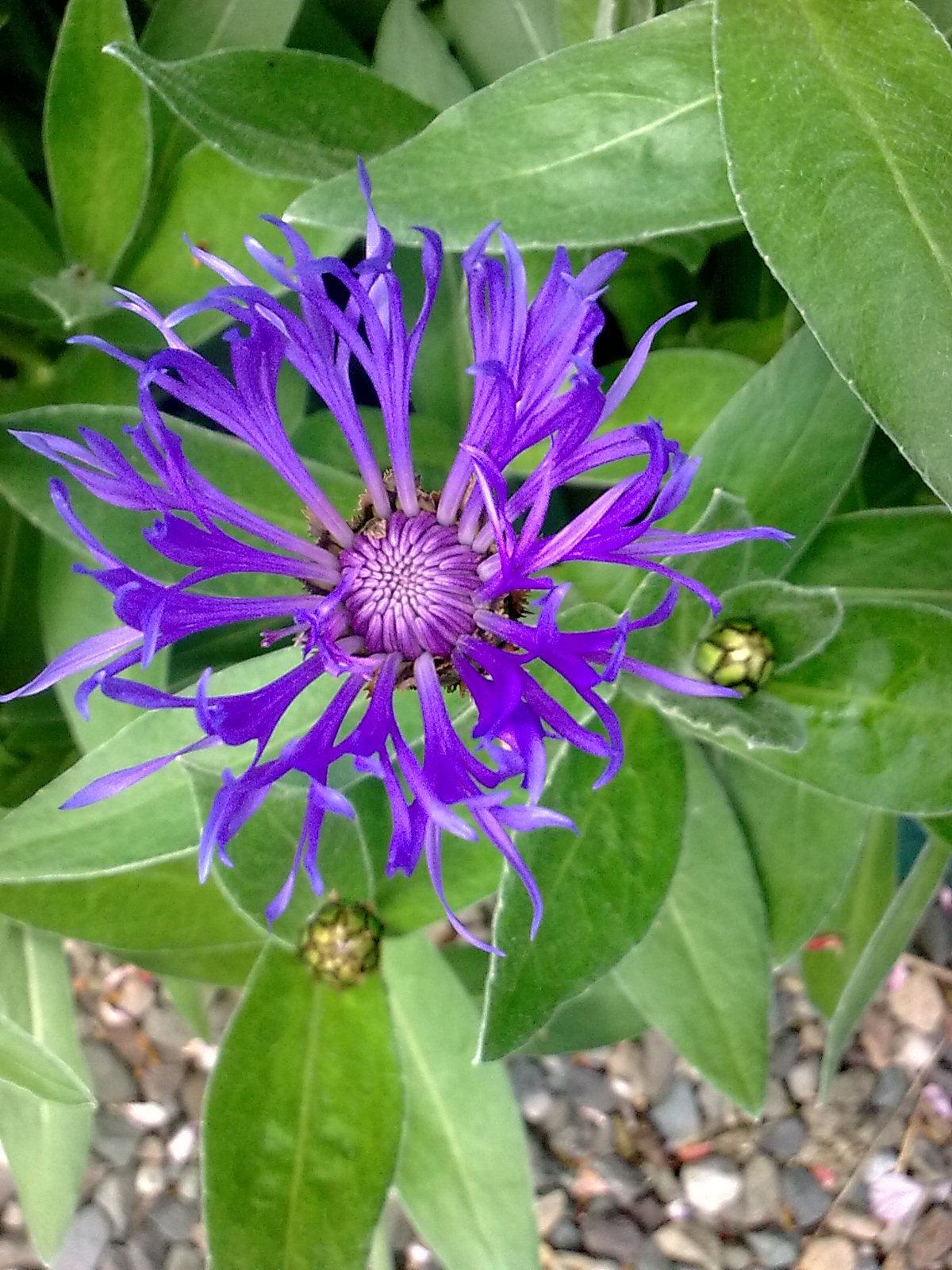
We have had very mixed success with Poppies. I’m not sure why some years they have flourished and then failed to really grow the following year and we are now down to one or two plants that have grown well, but failed to flower! A bit more experimenting with position required!
As you can in the pictures above, our herbaceous perennials include native plants such as Primrose and Heath Bedstraw (Galium saxatile), and in addition we have Common Knapweed and Wild Strawberry (both not illustrated). Unfortunately the Achillea shown above failed to survive a recent winter and so far we haven’t replaced it, although we have added Zantedeschia (Arum Lily) to another location in the main herbaceous bed. Where possible we now grow both native species and ornamentals side by side, having given up the idea of having a separate “wild garden” area. It works for us.
Since 2022 we have experimented with other herbaceous perennials and have now added Brunnera macrophylla ‘Alexandras Great’ and ‘Variegate’, Aster ‘Marie Ballard’; Pulmonaria ‘Trevi Fountain’ and ‘Blue Ensign’ and some additional Astilbes. The Pulmonaria providing some additional early colour with the Asters extending the season at the other end of the year.
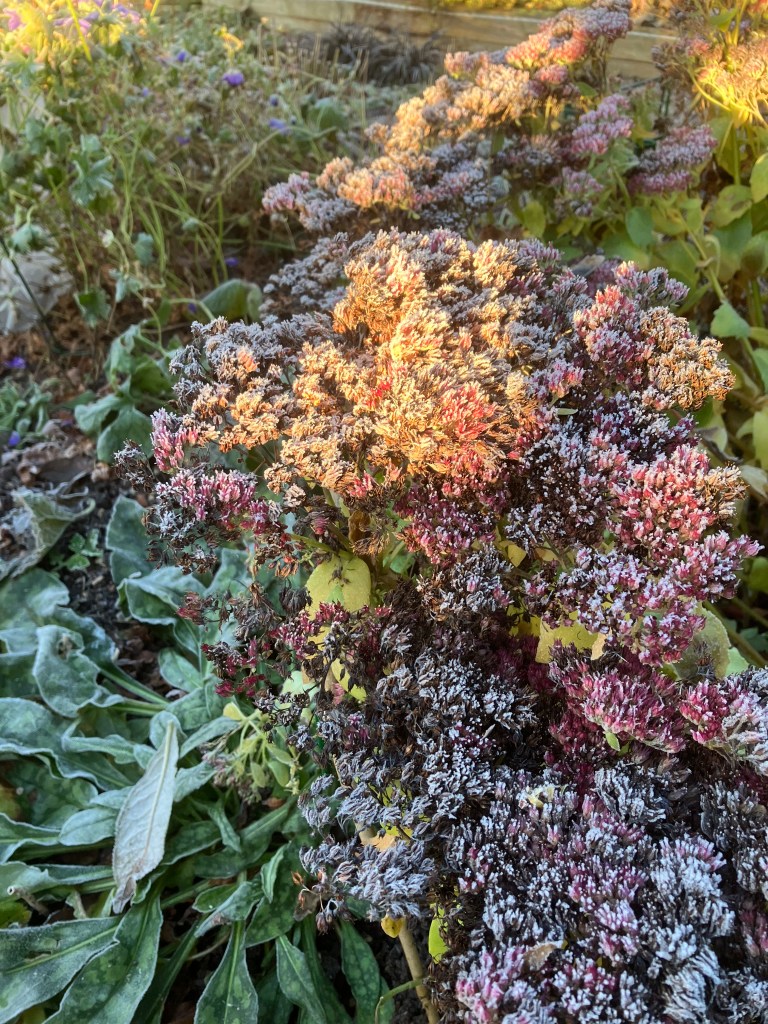
A large clump of Hylotelephium spectabile(or Sedum) continues to flourish and produces useful autumn colour and food for insects.
 An Experimental Garden