Whilst creating a green roof on a bird table, bug hotel or a cycle or bin store is relatively easy we had always wanted to develop a green roof on a slightly larger scale.
We had already looked at the idea of a living roof on the new single story extension to the house that was completed in 2004 but the costs at the time meant that we had to be content with a traditional tiled roof. In 2011 it became obvious that the workshop roof needed to be repaired or replaced – small puddles on the floor were a bit of a clue. Needing to work on the workshop roof provided another opportunity to consider a living roof.
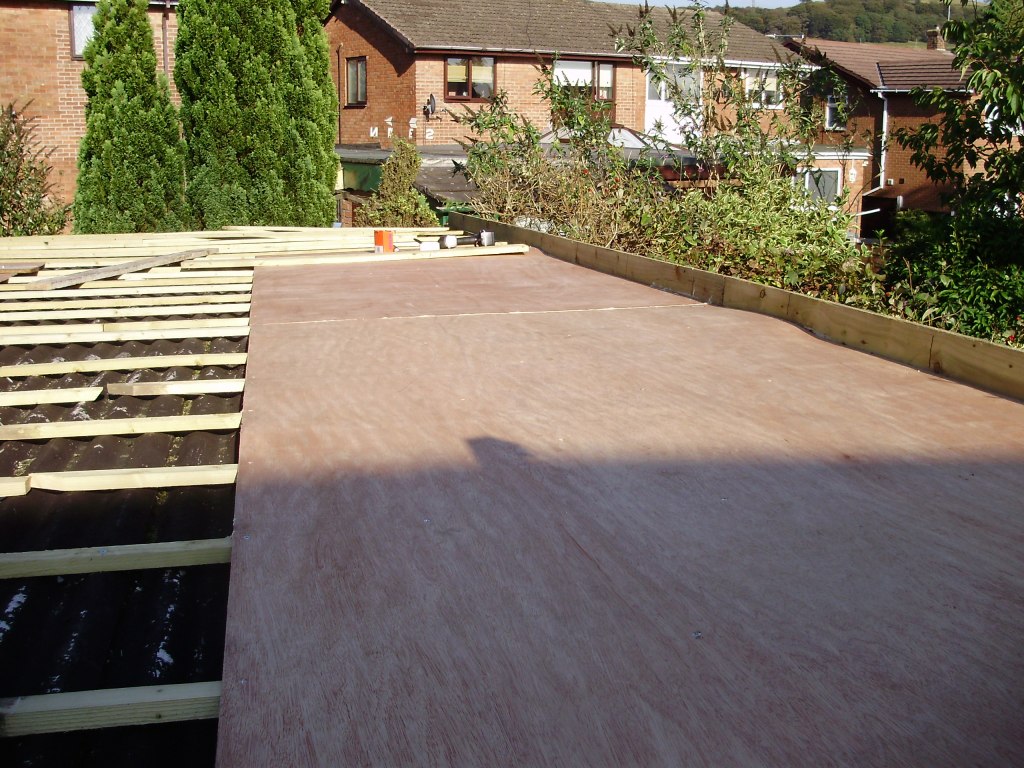
As this is a traditional ribbed asbestos roof the options were either to fully remove – an expensive and potentially dangerous option – or to encase the asbestos in other material on both sides stopping it from leaking and making it safe and secure; the option we finally chose.
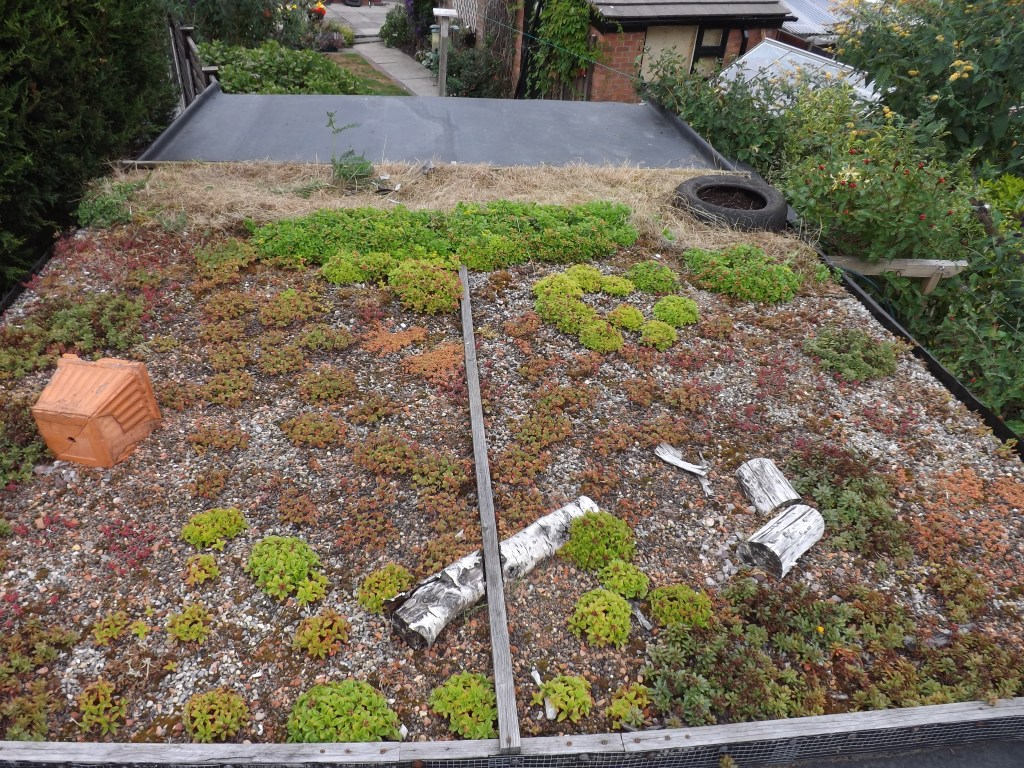
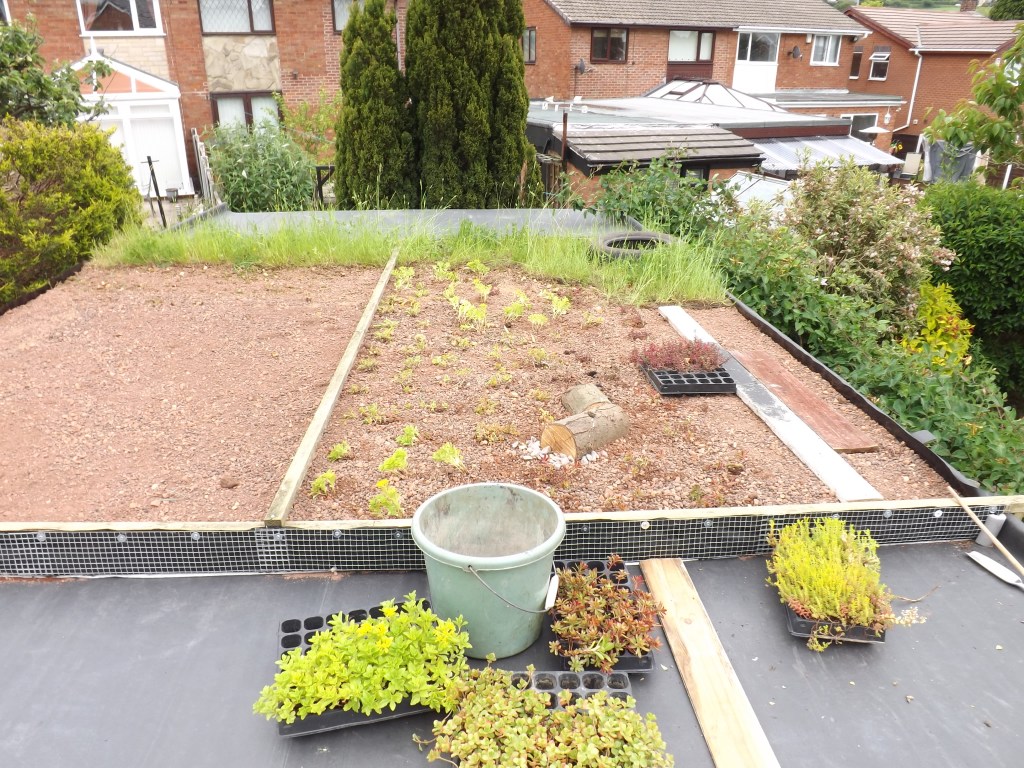
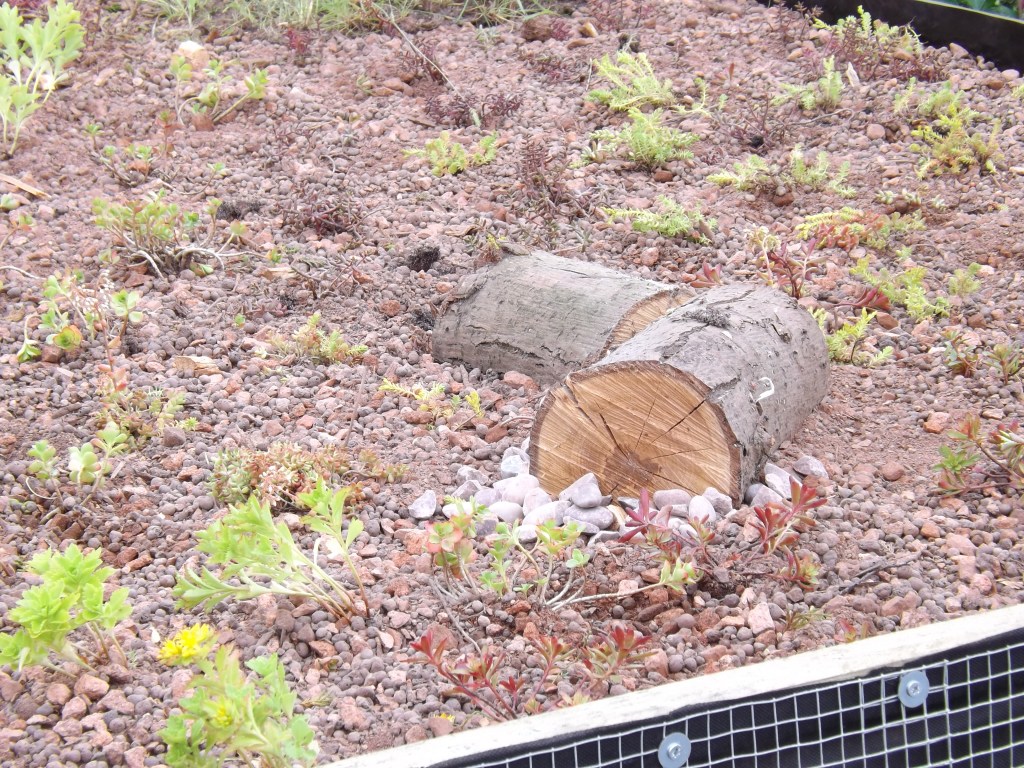
Having done our research, taking into account the potential weight of living roof, we opted to use Sedum plants across most of the area chosen for the garden. As we assessed that some additional supports inside the workshop would be needed this limited the area that could be used to a central area to avoid additional supports from blocking a workbench and making sure that the front section of the workshop was kept clear as this will, in the longer term, become a small garden room.
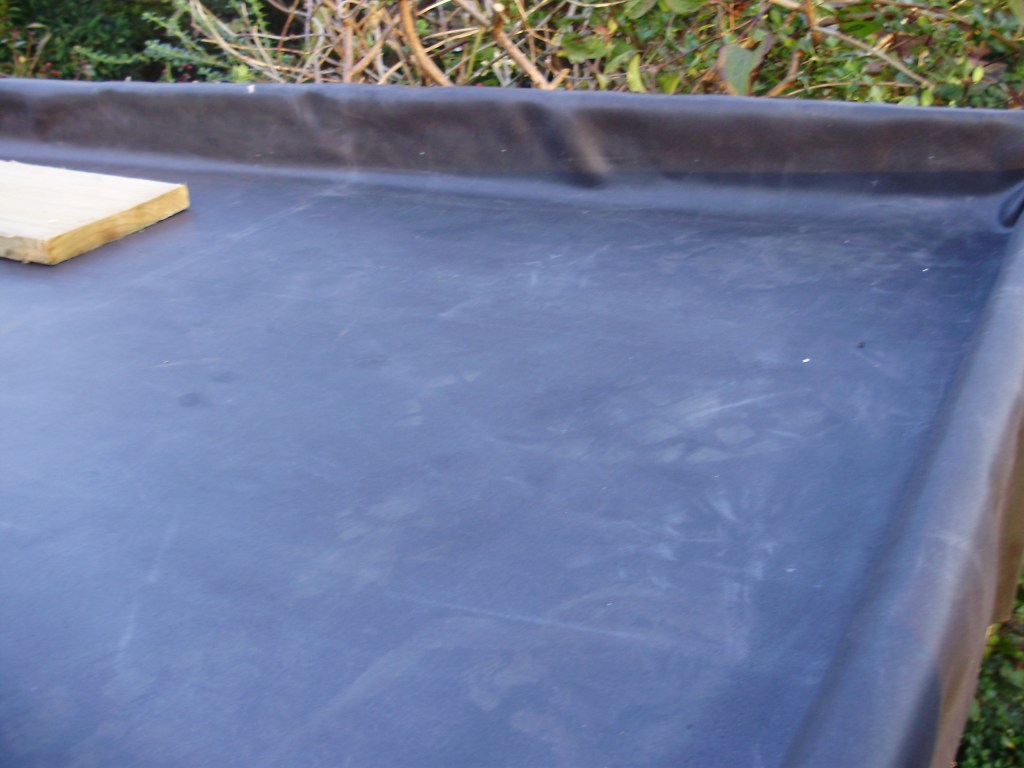
A timber frame and plywood sheeting covered the complete roof which was then covered with a single sheet rubber membrane. The garden area then used a proprietary plastic cell and fleece base covered in about 30mm mixture of brick dust, gravel and a small quantity of compost. The back of the area was coved with some left over wild flower meadow turf and an old tyre created an area with a greater depth of soil to enable a few other plants to be grown.

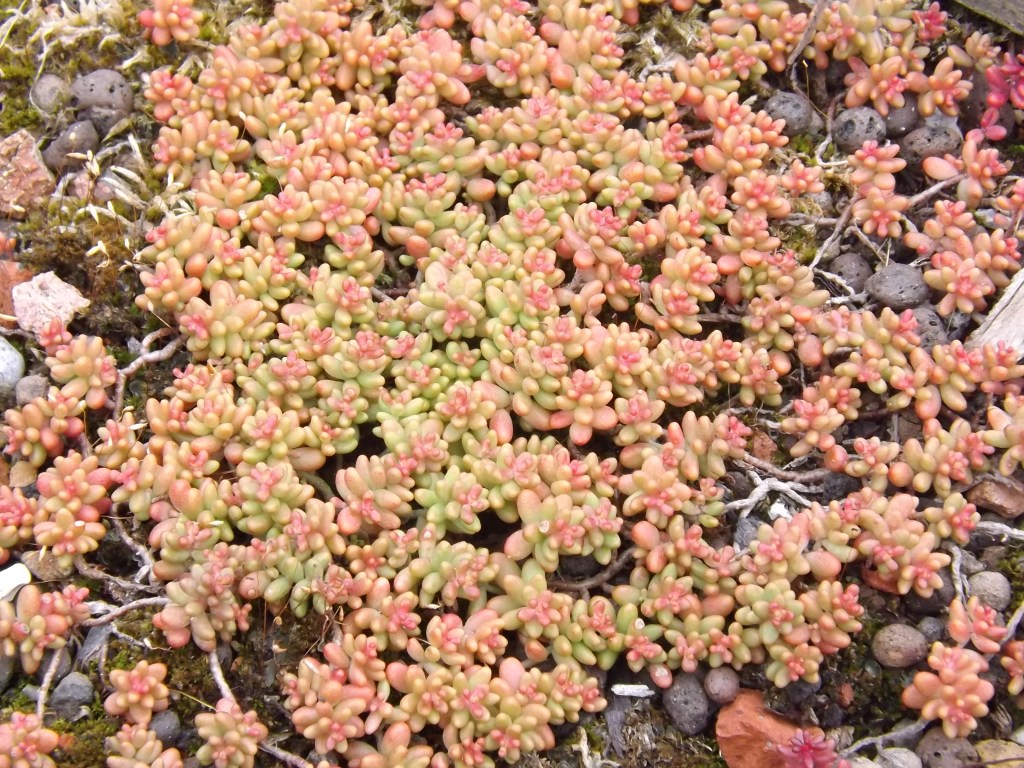
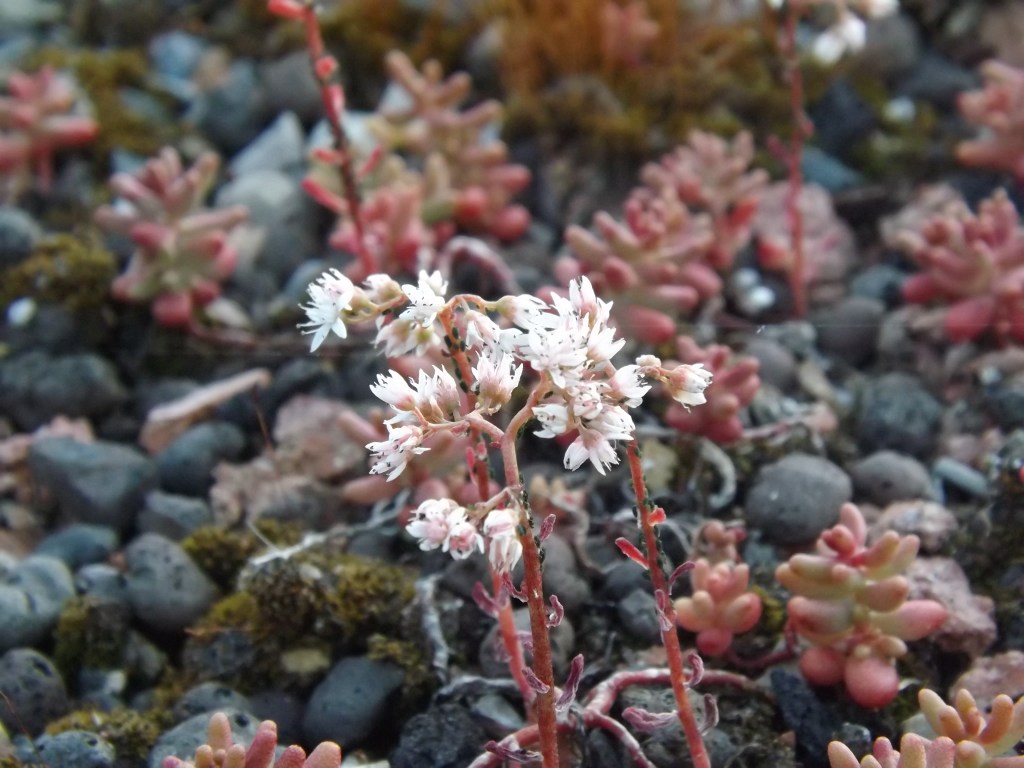
Maintenance has been limited to weeding a couple of times a year, small amount of replanting or gap filling and watering in dry spells in the first couple of years. Otherwise it looks after itself and has now matured and is nearly full. The wildflower meadow turf has bene an interesting addition with a different range of plants growing depending on the weather conditions early in the year and the impact of dry periods during the summer.
So – what have we learnt:
Firstly – roof gardens using small Sedum plugs take a number of years to come to maturity, so patience is required!
Secondly – be careful what other plants you choose. Although we are using an old car tyre to create an area with deeper soil at one edge of the roof garden this still needs to be watered as you would any other pot. Not always that easy unless you install an irrigation system – and we have lost a number of plants over the years. The Primula vialii just visible in the picture above on the left died off during a particular dry spell that coincided with us not being around to water the roof garden!
Thirdly – even though we can’t easily access the roof garden without a ladder it can be seen from our office – and has been a real bonus for me during the Covid-19 lockdown periods when I have been working from home. Plus it is a real attraction for wildlife and is often full of bees and other insects.
 An Experimental Garden