Wild or Native plants are something that we have been keen to incorporate if at all possible – although they do sometimes need managing to ensure they don’t take over!
We experimented with a wild flower meadow for a period of time but, I think, due to a combination of the types of wild plants that were in the meadow turf we bought, and the number of trees and tall growing shrubs that create almost a woodland environment, this didn’t really flourish. One year a Teasel plant grew and due to the shaded location managed to reach about 2.4m!
Initially we retained part of the original lawn with the “meadow” being a slightly raised area to one side. As our summers have got wetter (so it seems) we often found the lawn was flooding and taking a number of days to dry out enough to be walked on. We eventually made the decision to remove the remaining lawn and replace, as can be seen in the bottom picture, with gravel. Although this still floods it drains away much quicker and can be walked on and the area used in a matter of hours. As you can see this has become one of favourite spots in the garden for seating and eating!


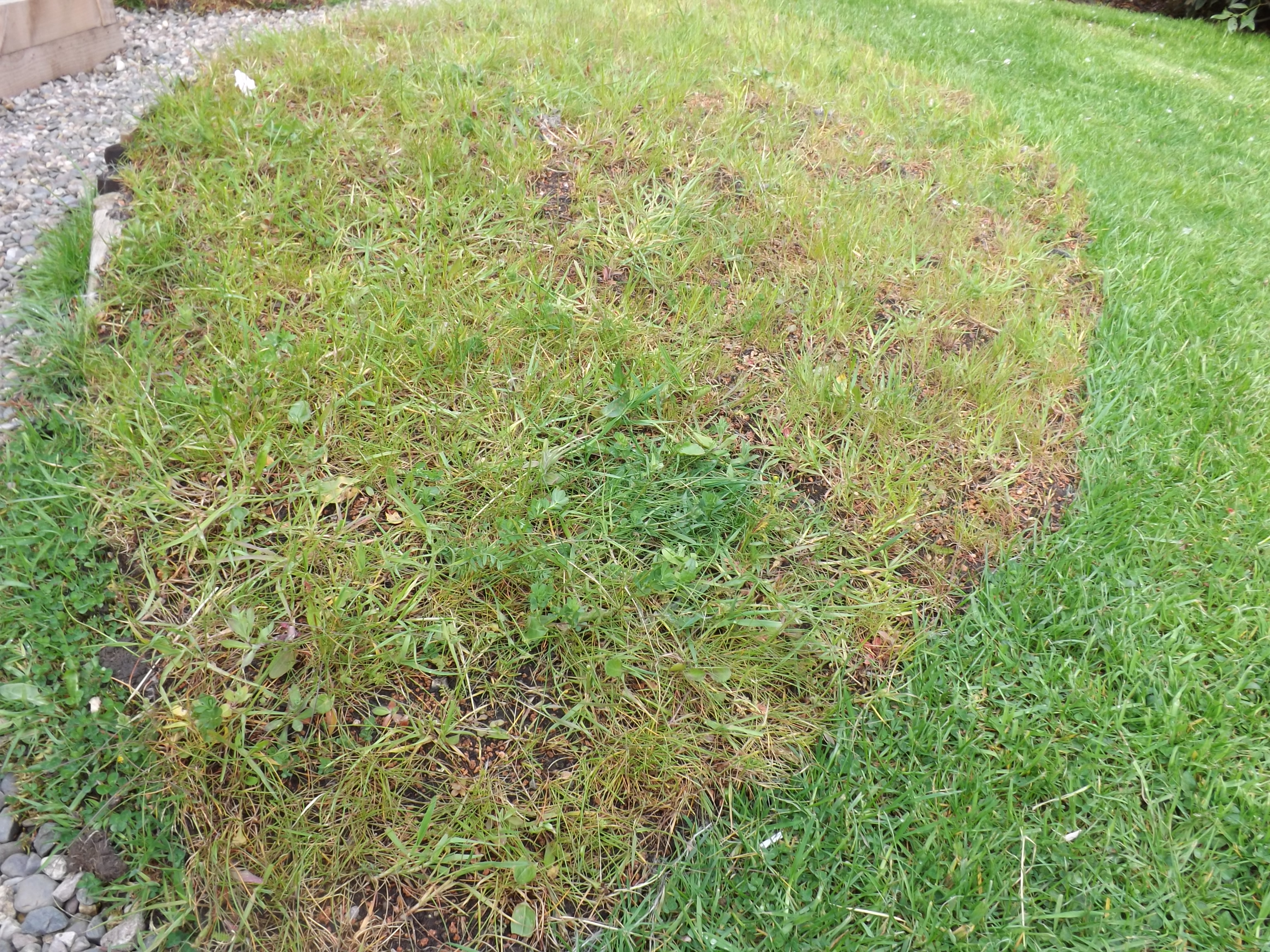
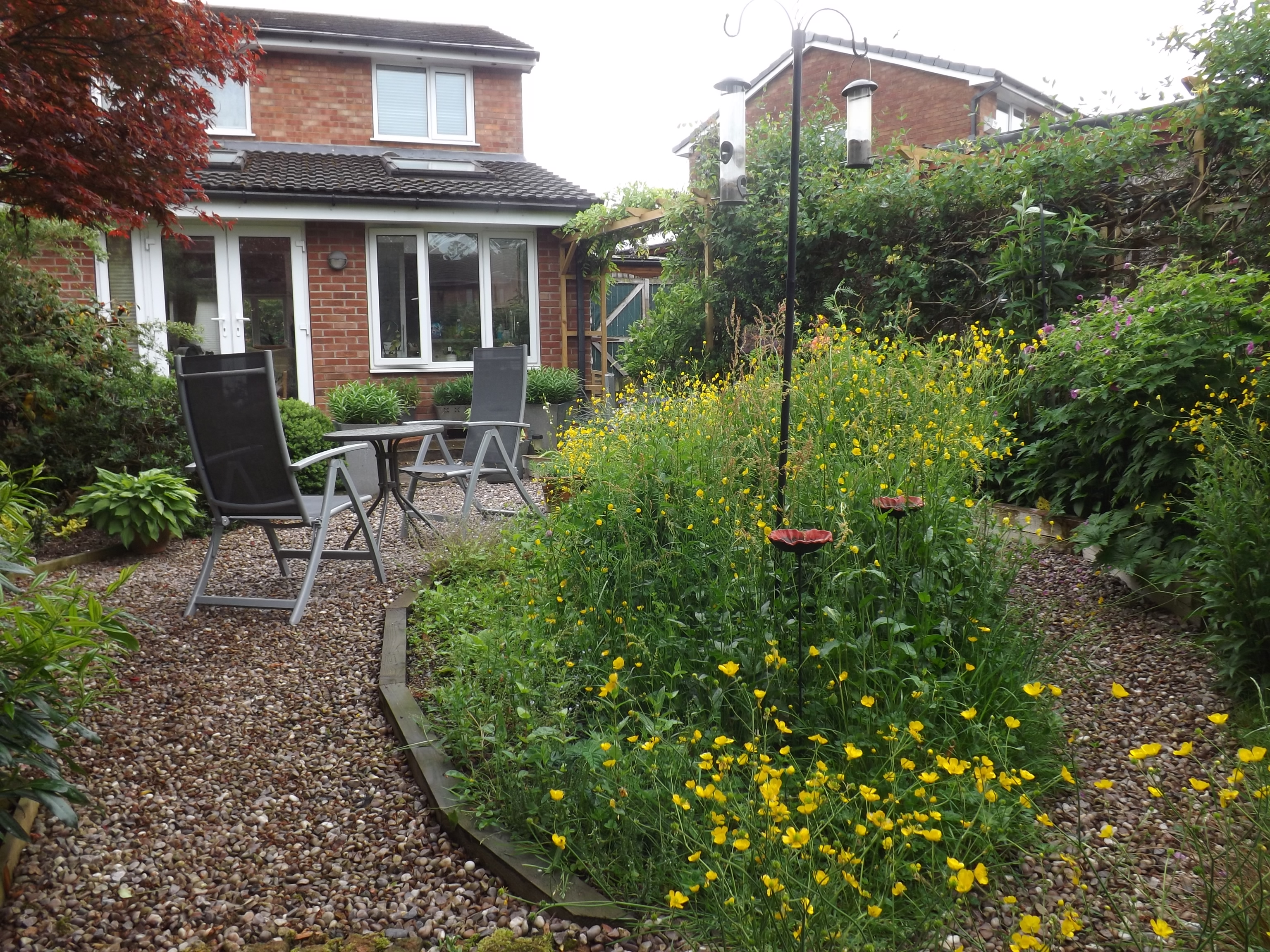
Buttercups and Sorrel soon began to dominate along with a number of clumps of Knapweed later in the season. Although we persevered with this for a number of years we finally decided to remove the majority of the plants and create a mixed herbaceous bed in it’s place.
However, when we first laid the wild meadow turf we had sufficient pieces left to add to the edge of the pond and the lay a line across the back of the roof garden on top of the garage.
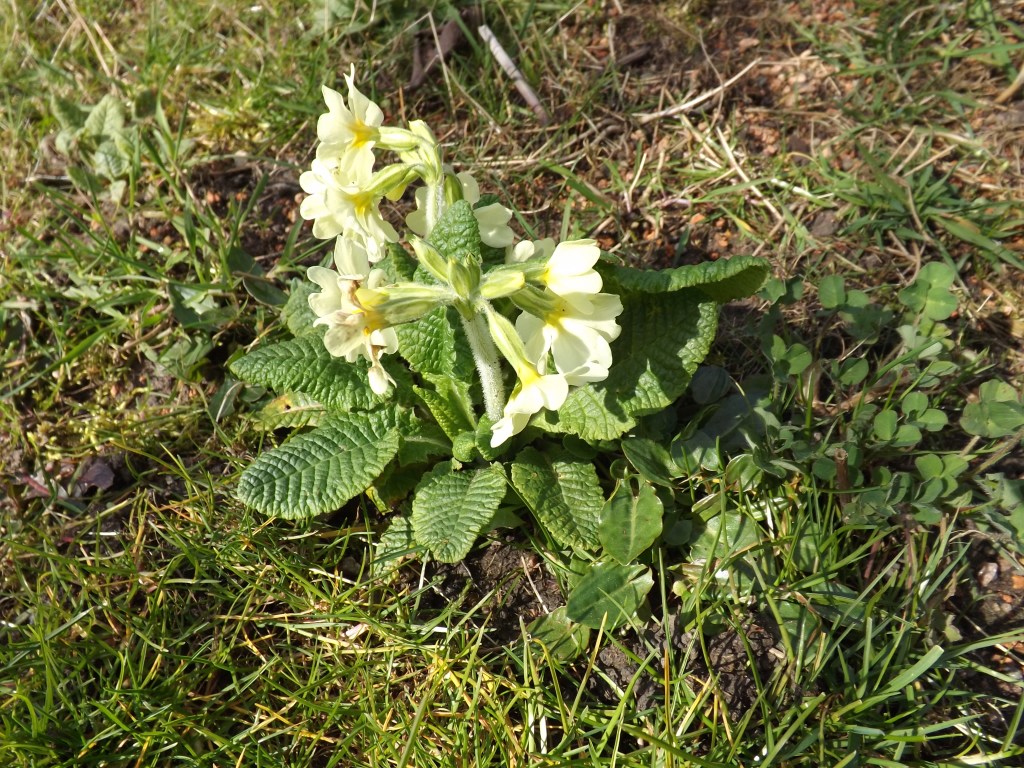
We didn’t give up everything and still have a couple of clumps of Knapweed, a selection of Primulas which include the native Primrose and Cowslips. A persistent Wild Strawberry continues to flourish in a corner of the bed despite being flooded out on a number of occasions. We haven’t had any fruit from it, but it contributes to the mix of wilder native plants that we have managed to retain.

So, what have we learned from experimenting with a wild flower meadow?
Firstly – if you start out with wild flower meadow turf with a pre-selected range of plants what grows each year will vary considerably depending on the weather and soil conditions. The spare pieces of turf that made it onto the Roof Garden often dry out completely and any grasses that have grown die down, often often making it easier for other plants to thrive. Plants such as Common Vetch, Bird’s Foot Trefoil and Yarrow have all appeared following dry spells when most of the grass has died;
Secondly – that wild or native plants can be successfully mixed with more ornamental selections and can contribute to the overall look and feel of any garden. We now garden on that basis and you will see examples of native herbaceous perennials alongside ornamentals. Probably one of our most impressive individual plat displays is the Galium saxatile (Heath Bedstraw) planted underneath the Acer palmatum
Thirdly – don’t be afraid to experiment! A number of years ago we got hold of a small plant of Butcher’s Broom, Ruscus aculeatus, and now this is thriving in the shade under the Cherry Tree and between a couple of mature Azaleas. Although available from a range of nurseries across the country a number of native plant guides suggest that the north of England is just outside the normal range of this plant.
Fourthly – if you do mixed native species with ornamentals be prepared for a bit of extra work! The natives can be either more vigorous or very good at setting and distributing seed, meaning more trimming or weeding out of young plants that appear in the wrong place.

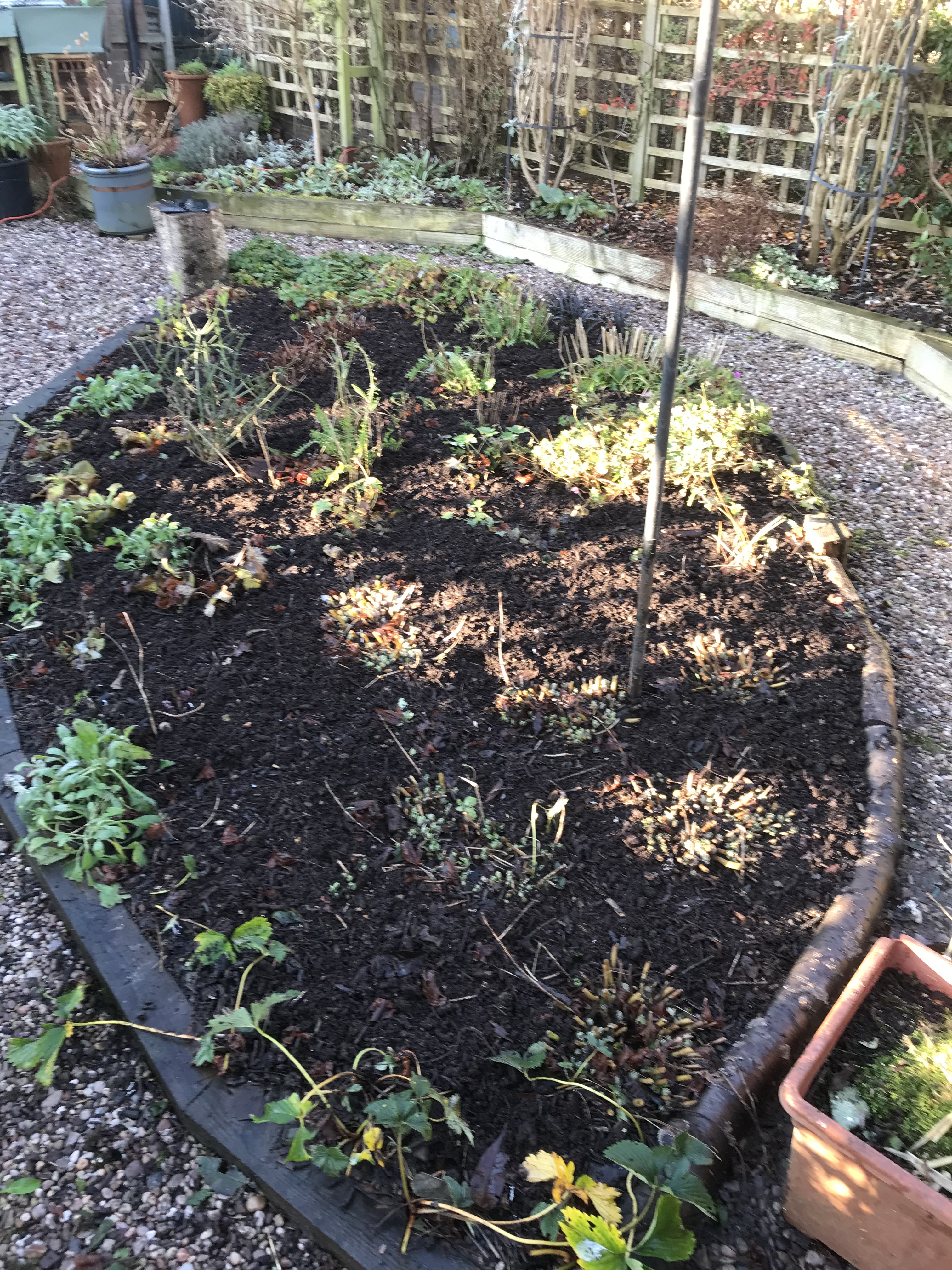
What was once a “wild flower” meadow as part of a grass area is now a raised bed with an ever growing and changing mix of native and ornamental herbaceous perennials.
The benefit of “experimental gardening” is that areas of the garden change and evolve to meet the needs of the plants as well as what we want to achieve from the garden. Don’t be afraid to admit if something didn’t work, or be too upset if a particular plant does not do well or survive – just try a different approach or a different part of the garden. Even a small garden like ours has different conditions and different micro-climates.
Happy experimenting!
 An Experimental Garden